
 Save to Pinterest
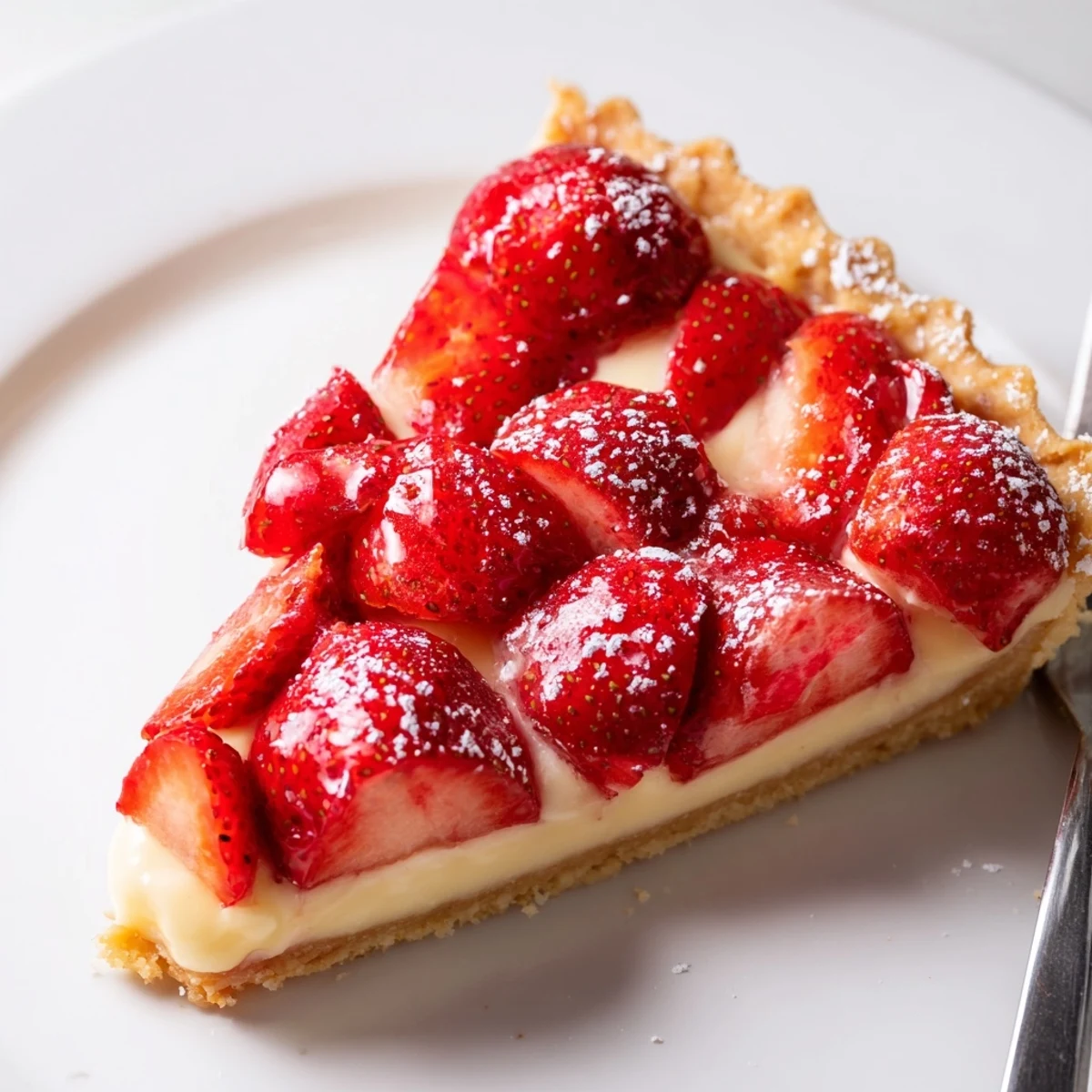
 Cette tarte aux fraises marie une pâte sablée beurrée et friable, une crème pâtissière vanillée onctueuse et des fraises fraîches nappées d'un voile d'abricot brillant. Préparez la pâte, laissez-la reposer 30 minutes puis cuisez à blanc 30 minutes à 180°C. Réalisez la crème à la vanille, laissez refroidir au contact et montez la tarte avant un passage d'1 heure au frais pour une tenue parfaite. Donne 8 parts.
The first sign of strawberries at the market always reminds me how joyful it is to bake a French tarte aux fraises. There is something almost theatrical about building those rosy circles on cool, custard-filled pastry. I once found myself humming without realizing, fingers dusty with flour, because the scent of butter and vanilla had simply set the mood. The whole kitchen takes on a quiet giddiness when this tart is in progress.
One Saturday in early June, I baked this tart for friends coming over after a garden walk, which led to spontaneous laughter when we tried arranging the strawberries in a perfect spiral. No one cared about symmetry by the end, and we remembered how fun it is to just enjoy the making (and eating) together. It became about sticky fingers and sharing stories as much as the dessert itself.
Ingredients
- Flour (250 g): Opt for all-purpose flour for the crisp foundation - sifting keeps the dough light.
- Chilled unsalted butter (125 g): Cold, diced butter is essential for that crumbly, tender crust; press lightly with your fingertips.
- Powdered sugar (80 g): Sugar gives a delicate sweetness and makes the pastry tender.
- Egg (1): The egg brings the dough together, just enough for a smooth ball; try not to overwork for the flakiest result.
- Pinch of salt: Brings out the flavor in the crust, don't skip it!
- Whole milk (500 ml): Rich milk creates a creamy pâtissière, so I always use full-fat when I can.
- Vanilla (1 pod or 1 tsp extract): Scraping seeds from a fresh pod perfumes the whole custard, or use quality extract if that's what you have.
- Sugar (100 g): Whisked with egg yolks, it lends silkiness to the custard.
- Egg yolks (4): Use leftover whites for meringues, and whisk the yolks until pale and creamy.
- Cornstarch (40 g): Prevents lumps and achieves perfect cream set - whisk thoroughly for best results.
- Butter (30 g): Stirred in at the end, it delivers a luscious finish to the crème pâtissière.
- Fresh strawberries (500 g): The stars - choose ripe, fragrant berries and dry them gently after rinsing.
- Apricot jam (2 tbsp): Heated briefly with a splash of water, it gives your fruit a beautiful glossy shine.
- Water (1 tbsp): Just a touch, so the jam glides effortlessly over the strawberries.
Instructions
- Mix the pastry:
- Combine the flour, salt, and powdered sugar in a large bowl, then quickly blend in the cold butter with fingertips until the mixture looks like coarse breadcrumbs. Add the egg and shape into a dough, being careful not to overwork it, and wrap to chill for 30 minutes.
- Blind bake for crispness:
- Preheat your oven to 180°C. Roll the dough out, gently lift into a tart tin, prick the base, line with parchment and fill with baking weights; bake 20 minutes, remove weights, and bake 10 minutes more for golden edges, then cool completely.
- Make the custard:
- Warm the milk and vanilla until just steaming. In another bowl, whisk yolks and sugar till creamy, whisk in cornstarch, then gradually pour in a little hot milk; return all to the pan and cook over medium heat, whisking until thick, then stir in butter off the heat and cover directly with wrap to cool.
- Prepare your strawberries:
- Rinse, hull, and cut the berries—some in halves, some whole—for a lovely mix of sizes and texture.
- Assemble the tart:
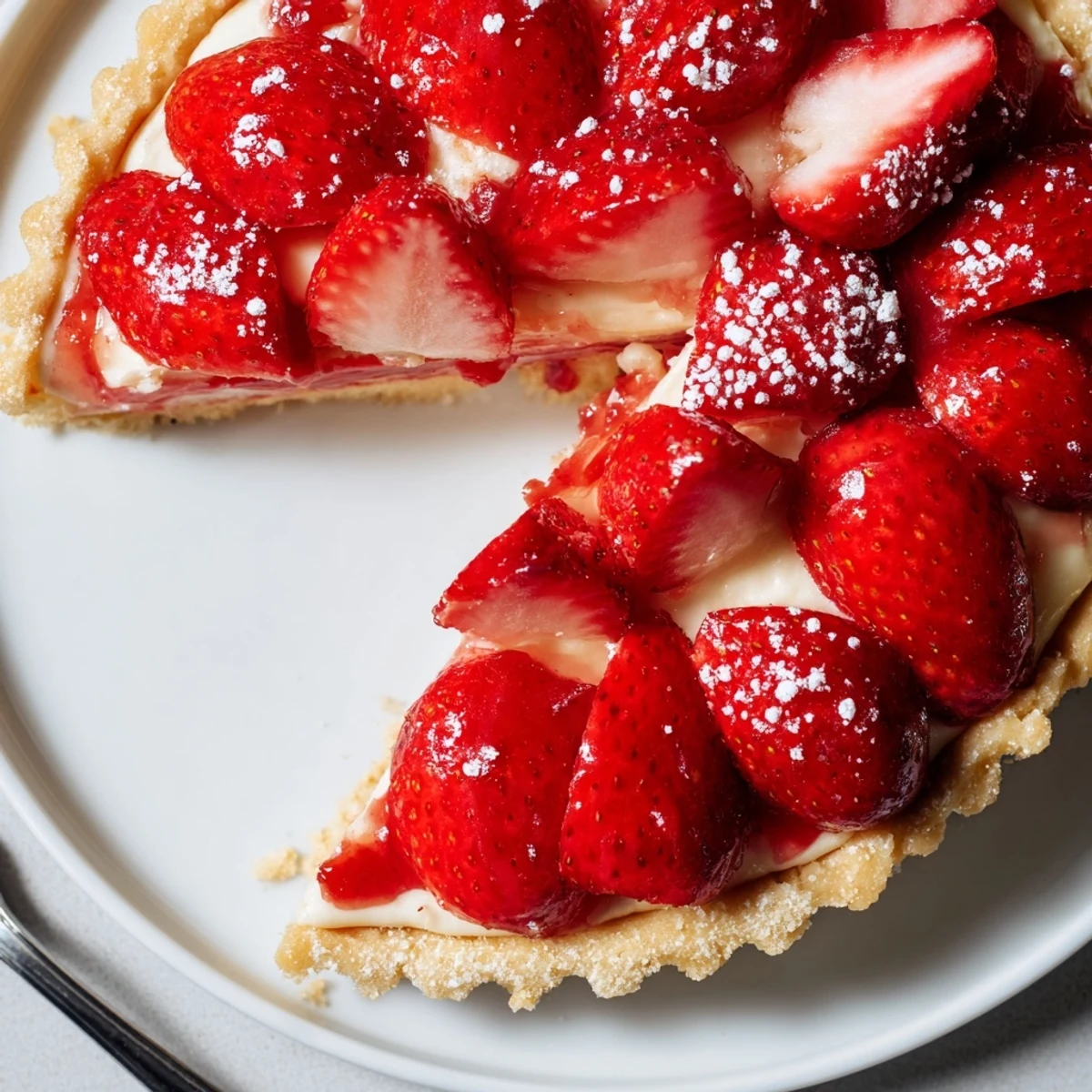
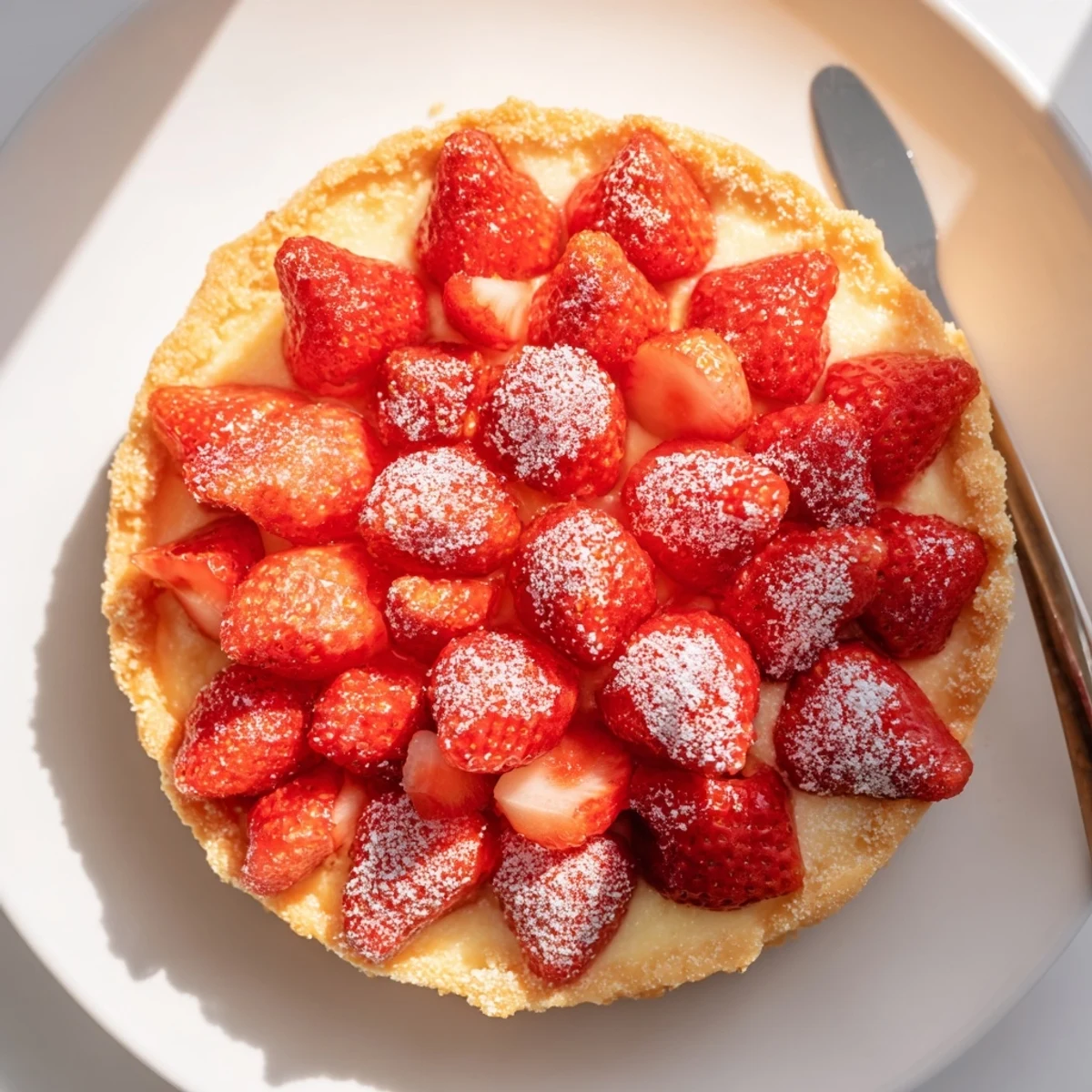
- Spoon chilled crème pâtissière into the cooled tart case and smooth the surface. Layer strawberries in concentric circles, nudging each into place.
- Glaze for shine:
- Heat the apricot jam with water until syrupy; gently brush over the berries with a pastry brush so they glisten gorgeously.
- Chill and serve:
- Let the tart rest in the fridge for at least an hour so the flavors meld and the filling firms up before slicing.
 Save to Pinterest
 More than once, I've seen someone take their first bite and immediately close their eyes with a silent smile—nothing else needed to be said. It’s that moment you realize sharing dessert is a tiny act of happiness.
All About the Perfect Crust
I used to rush through making the pastry until I realized how much texture depended on working quickly and chilling thoroughly. This little patience pays off with a crisp bite every time, and rolling the dough out between two sheets of parchment is my trick to an even, patch-free base.
Customizing Your Tart
Some days I swap a portion of strawberries with raspberries or layer thin slices of mint for a bright pop. You can even experiment with a hint of citrus zest in the cream—for me, a touch of lemon is lovely and subtly lifts the whole tart.
Serving and Storing Tips
For the cleanest slices, use a large sharp knife dipped in hot water. The tart is at its best the day it's made, but I’ve been known to sneak a chilled slice for breakfast the morning after.
- Dust lightly with powdered sugar just before serving for an extra touch.
- If you have leftovers, store them in the fridge uncovered to keep the pastry from softening too quickly.
- Don't assemble the tart far in advance—wait until you're almost ready to serve so strawberries look their freshest.
 Save to Pinterest
 With every slice, this tarte brings a dose of sunshine to the table. May your kitchen fill with sweet laughter and the scent of fresh berries.
Recipe FAQs
- → Comment réussir la pâte sablée ?
-
Travaillez le beurre froid en petits dés et sablez rapidement avec la farine pour éviter de chauffer la pâte. Incorporez l'œuf sans pétrir excessivement, formez une boule, filmez et réfrigérez au moins 30 minutes. Cuisson à blanc avec poids puis finir sans poids pour une coloration uniforme.
- → Comment obtenir une crème pâtissière lisse ?
-
Fouettez les jaunes avec le sucre, ajoutez la maïzena puis tempérez avec un peu de lait chaud avant de tout remettre à cuire. Remuez sans cesse jusqu'à épaississement, cuire juste le temps nécessaire, puis filmer au contact pour éviter la peau.
- → Peut-on remplacer le nappage à l'abricot ?
-
Oui : gelée de pomme tamisée, nappage neutre commercial ou un sirop léger (confiture diluée) chauffé et filtré fonctionnent bien. L'objectif est d'apporter brillance et protection sans alourdir les fruits.
- → Comment préparer les fraises avant le montage ?
-
Choisissez des fraises fermes et parfumées, lavez-les rapidement et équeutez-les au dernier moment pour conserver la fermeté. Coupez selon l'effet désiré (en deux ou en tranches) et disposez-les harmonieusement sur la crème refroidie.
- → Combien de temps et comment conserver la tarte ?
-
Conserver au réfrigérateur jusqu'à 48 heures dans une boîte hermétique. La pâte peut perdre légèrement de son croustillant ; pour un meilleur rendu, consommez le jour même ou retirez-la 15–20 minutes avant le service.
- → Quelles variantes possibles pour la garniture ?
-
Ajoutez du zeste de citron à la crème pour une note acidulée, incorporez de la poudre d'amandes à la pâte ou remplacez tout ou partie des fraises par des framboises ou des fruits rouges selon la saison.