
 Save to Pinterest
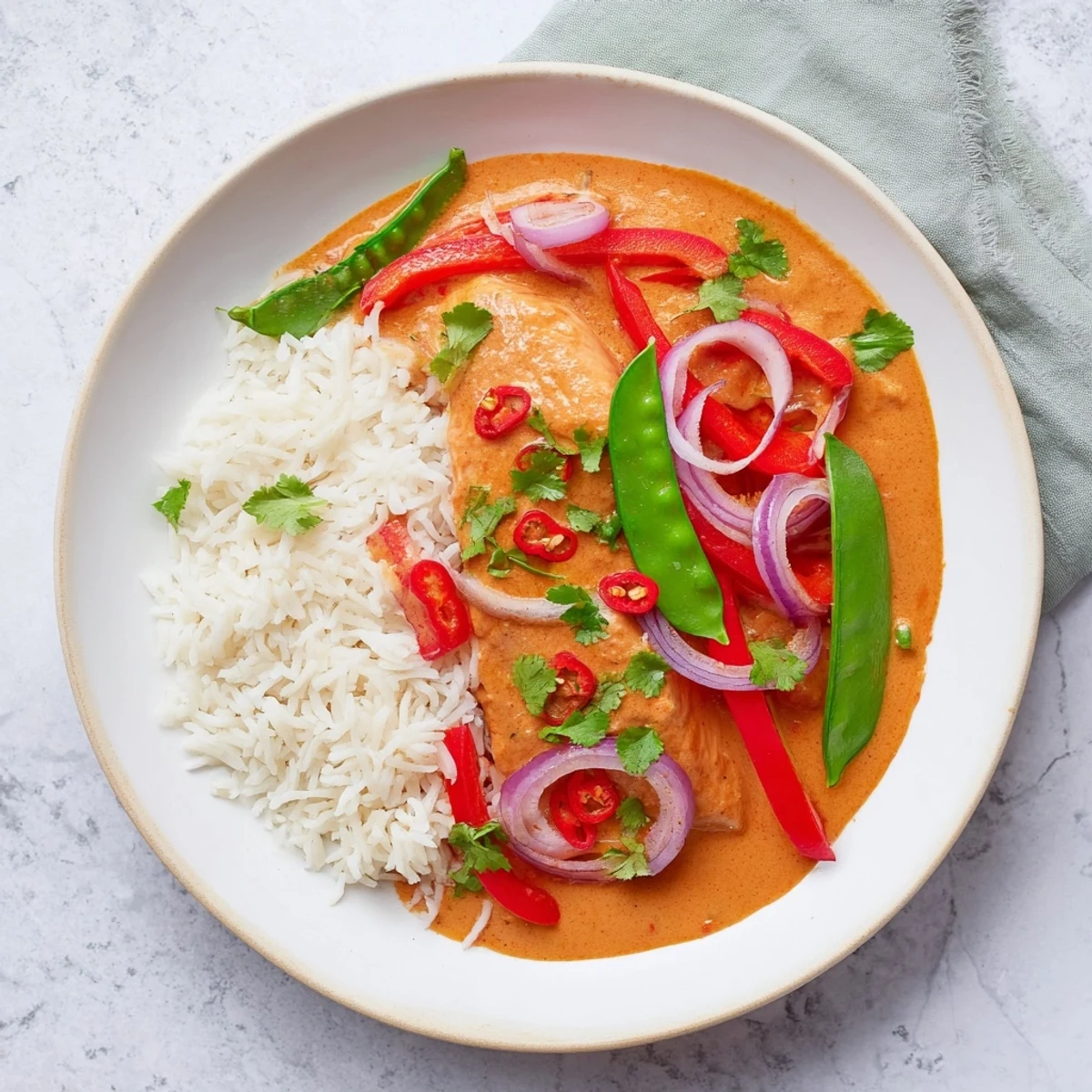
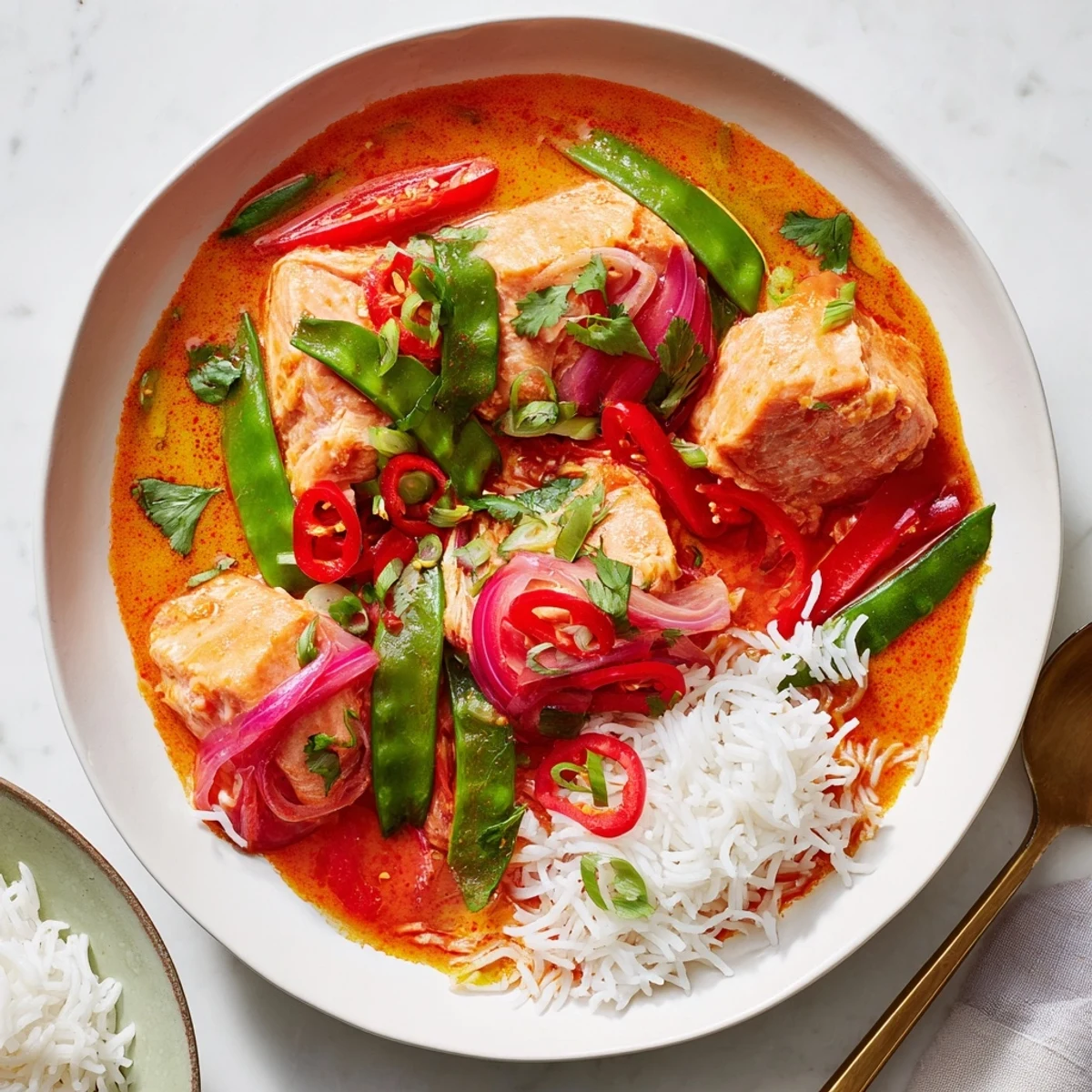
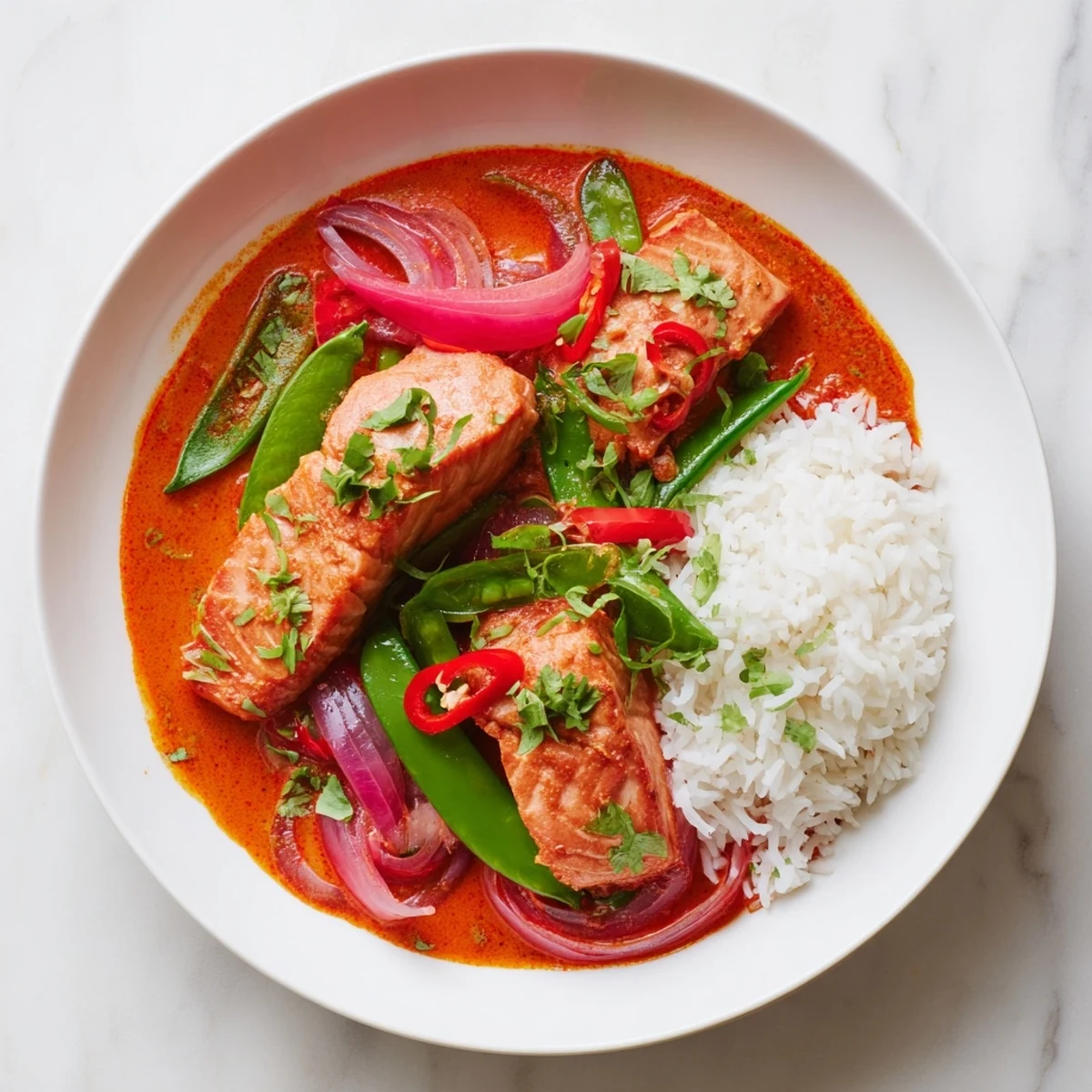
 This vibrant dish brings together succulent salmon fillets with the creamy richness of coconut milk and the warming spice of red curry paste. The fish gently poaches in the fragrant sauce, absorbing the complex Thai flavors while staying moist and tender. Crisp vegetables like bell pepper, sugar snap peas, and red onion add refreshing crunch and color. Fresh coriander brings a bright, herbal finish that balances the rich sauce. Serve over fluffy jasmine rice to soak up every drop of the flavorful coconut curry broth. Ready in just 35 minutes, this makes an impressive yet effortless dinner for any night of the week.
The aroma of red curry paste hitting hot coconut milk still stops me in my tracks every single time. I stumbled onto this combination during a particularly gray February when my regular rotation of salmon recipes had gone stale. Something about the rich, creamy sauce folding into tender flakes of fish felt like discovering a secret language between Thai comfort food and weeknight practicality.
Last Tuesday my roommate wandered in halfway through cooking and literally hovered over the pan, asking what smelled so incredible. We ended up eating straight from the skillet because neither of us could wait another second for proper plating. Thats the kind of immediate, no-fuss joy this dish brings to the table.
Ingredients
- 4 salmon fillets: Skinless works best here so the sauce can coat every inch of the fish
- 1 tablespoon vegetable oil: Just enough to bloom those spices and get the curry paste going
- 2 tablespoons Thai red curry paste: The backbone of the entire dish, do not skimp here
- 400 ml coconut milk: Full fat version makes all the difference for that luxurious mouthfeel
- 1 tablespoon fish sauce: Adds that essential depth and umami you cannot replicate
- 1 tablespoon brown sugar: Balances the heat and brings everything together
- Juice of 1 lime: Brightens the rich sauce and cuts through the coconut creaminess
- 1 red bell pepper: Thinly sliced for sweetness and crunch throughout
- 100 g sugar snap peas: They stay snappy even in the simmering sauce
- 1 small red onion: Adds another layer of sweetness and color
- Fresh coriander: The finishing touch that makes everything taste alive
Instructions
- Wake up the curry paste:
- Heat that oil in your largest skillet over medium heat and scoop in the red curry paste, letting it sizzle and bloom for about a minute until your kitchen smells amazing.
- Build the sauce:
- Pour in the coconut milk, fish sauce, brown sugar, and lime juice, stirring until everything dissolves into a smooth, fragrant liquid.
- Add the vegetables:
- Toss in the bell pepper, snap peas, and red onion, letting them simmer for just 3 or 4 minutes so they stay bright and crisp.
- Gently add the salmon:
- Nestle those fillets right into the sauce, cover the pan, and let everything simmer together for 10 to 12 minutes until the salmon flakes apart with practically no effort.
- Finish with freshness:
- Taste and tweak the sauce if it needs more lime or fish sauce, then scatter generous handfuls of coriander over everything before serving over steaming jasmine rice.
 Save to Pinterest
 This recipe became my go-to for nights when takeout feels too easy but cooking something elaborate feels impossible. The first time I made it for my parents, my dad actually went back for seconds, which is basically his highest culinary compliment.
Making It Your Own
Sometimes I swap in green beans or broccoli if the snap peas look tired at the grocery store. The beauty of this dish is how forgiving it is with vegetables, as long as they can hold up to that brief simmer without turning to mush.
The Rice Situation
Jasmine rice is non-negotiable for me here, but I have learned to start it before anything else. Nothing is more frustrating than having perfect salmon ready and waiting on undercooked rice while the sauce cools down.
Spice Level Adjustments
Some curry brands pack more heat than others, so always taste your sauce before adding the salmon. The coconut milk tames things considerably, but if you are sensitive to spice, start with one tablespoon of paste instead of two.
- Keep a lime wedge on the table for an extra hit of acid
- Extra fish sauce can rescue a sauce that tastes too flat
- Fresh chili slices at the end let heat lovers customize their portion
 Save to Pinterest
 There is something deeply satisfying about a meal that looks impressive but actually requires almost zero technique. This salmon has saved countless weeknights in my house, and I bet it will do the same in yours.
Recipe FAQs
- → Can I use curry powder instead of red curry paste?
-
Red curry paste provides the authentic Thai flavor profile with its blend of lemongrass, galangal, and kaffir lime. Curry powder won't give the same depth or creaminess when combined with coconut milk. Look for red curry paste in the international aisle of most grocery stores.
- → How do I know when the salmon is done?
-
The salmon is ready when it flakes easily with a fork and the flesh turns opaque throughout. The internal temperature should reach 145°F (63°C). Since the salmon poaches gently in the sauce, it stays moist and is less likely to overcook than other methods.
- → Can I make this dish dairy-free?
-
This dish is naturally dairy-free as it uses coconut milk instead of cream. Always check your red curry paste label, as some brands contain shrimp paste or fish sauce. For a fully plant-based version, substitute the salmon with firm tofu and use soy sauce in place of fish sauce.
- → What other vegetables work in this curry?
-
Beyond bell peppers and sugar snap peas, try adding baby corn, bamboo shoots, green beans, or broccoli. Add heartier vegetables like carrots or potatoes earlier so they have time to soften. Leafy greens like spinach or bok choy can be stirred in during the last 2 minutes of cooking.
- → Can I make this ahead of time?
-
The curry sauce tastes even better the next day as flavors meld. Make the sauce and vegetables up to 2 days ahead, then reheat gently before adding the salmon. Cook the salmon fresh so it doesn't become dry or overcooked from reheating.