
 Save to Pinterest
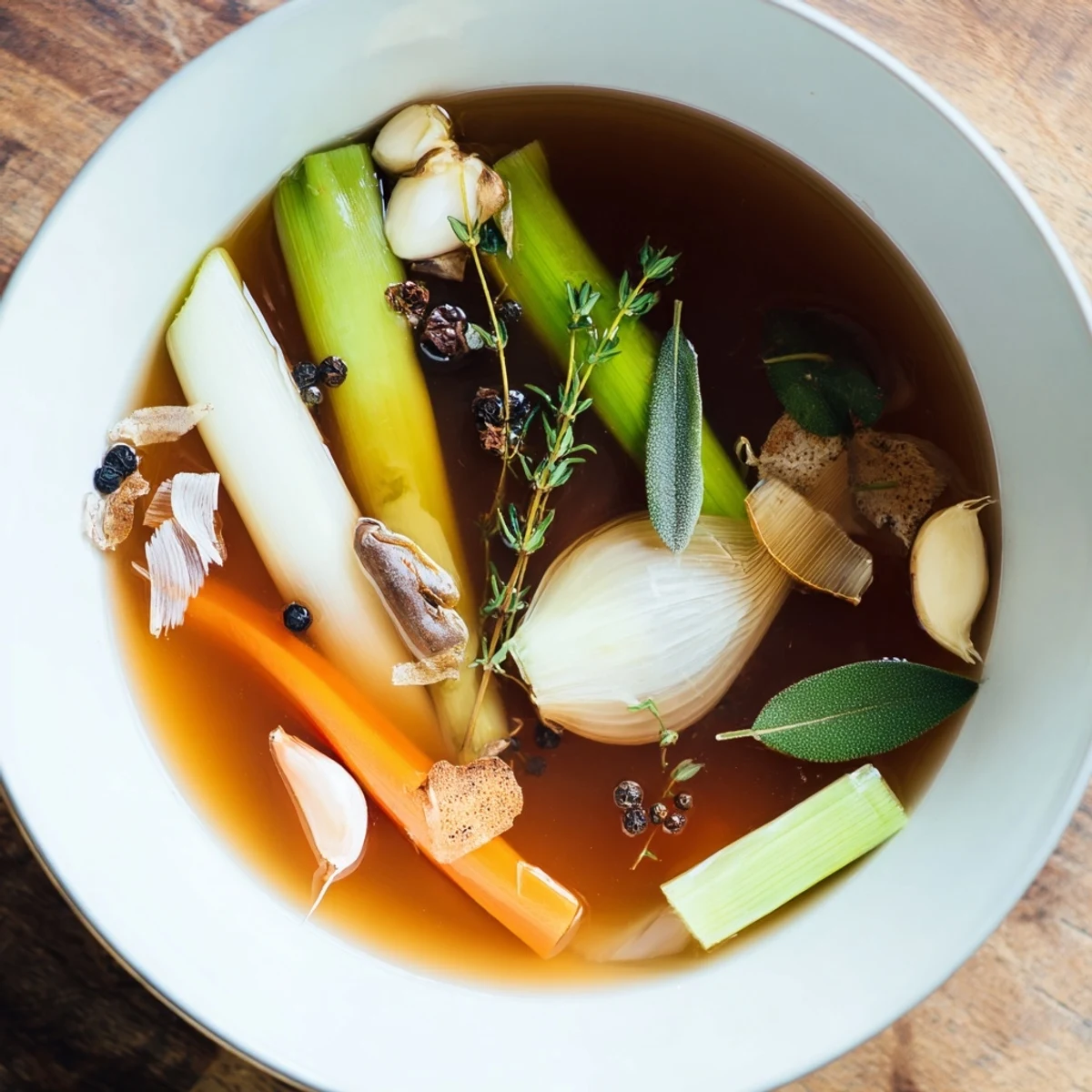
 This flavorful vegetable broth is made by simmering mixed vegetable scraps such as onion peels, carrot ends, and parsley stems with aromatics like bay leaves, thyme, and peppercorns. The broth gently simmers for an hour to extract deep, rich flavors ideal for enhancing soups, risottos, and sauces while reducing food waste. Strain well before storing, and adjust salt to taste. Avoid strong-flavored scraps like broccoli or cabbage to maintain a clear, balanced broth.
I started saving vegetable scraps on a whim one autumn, tossing onion skins and carrot ends into a container instead of the bin. A friend mentioned she made broth from hers, and I thought, why not try? That first batch simmered on the stove while I worked, filling the kitchen with an almost invisible warmth. When I strained it and tasted that golden liquid, I realized I'd been throwing away flavor all along.
My partner tasted a risotto I made with this broth and asked what I'd changed, genuinely surprised it could taste so much richer. That's when it clicked—this wasn't just thrifty, it was actually better cooking. Now whenever someone visits and I serve something made with homemade broth, they always taste the difference, even if they can't quite name it.
Ingredients
- Vegetable Scraps (4-5 cups mixed): Onion peels, carrot ends, celery leaves, mushroom stems, parsley stems, and leek tops are your allies—save them as you cook.
- Bay Leaves (2): These anchor the broth with a subtle earthiness that builds depth without being obvious.
- Black Peppercorns (6-8): Whole peppercorns add warmth and spice that keeps the broth from tasting flat or one-dimensional.
- Fresh Thyme (2 sprigs or 1 tsp dried): Thyme brings a quiet herbaceousness that ties everything together.
- Fresh Parsley Stems (1 handful, optional): Don't throw these away—they're packed with flavor that leaves taste sweet and bright.
- Garlic (2 cloves, smashed, optional): If you haven't already caught garlic skins in your scrap collection, add these for gentle savory notes.
- Salt (1 tsp, adjust to taste): Start conservative here; you can always taste and add more once the broth is finished.
- Cold Water (2.5 liters): Cold water extracts flavors slowly and cleanly, which is exactly what you want for a clear, refined broth.
Instructions
- Gather and Ready Your Scraps:
- Collect your vegetable scraps in a container as you prep meals over a few days, keeping them in the fridge if needed. Before you start, give them a quick rinse and discard anything with dirt or mold.
- Build Your Pot:
- Place all the scraps in a large stockpot, then add your bay leaves, peppercorns, thyme, parsley stems, garlic, and salt. The pot should feel full but not packed.
- Cover and Heat:
- Pour in cold water until the scraps are submerged by about an inch. Turn the heat to medium-high and let it come to a gentle boil—you're looking for that first moment when bubbles start breaking the surface.
- Simmer and Tend:
- Once boiling, lower the heat to a gentle simmer where just the occasional bubble breaks through. Let it go for a full hour, and every 15 minutes or so, skim off any gray foam that rises to the top—this is impurities and keeps your broth clear.
- Cool and Strain:
- Turn off the heat and let the pot sit for a few minutes so the scraps settle. Set a fine mesh sieve or cheesecloth over a large bowl and carefully pour the broth through, letting gravity do the work and discarding all solids.
- Taste and Adjust:
- Once it's cooled enough to taste safely, sip a small spoonful and decide if you need more salt. Remember it will concentrate slightly as it cools.
- Store:
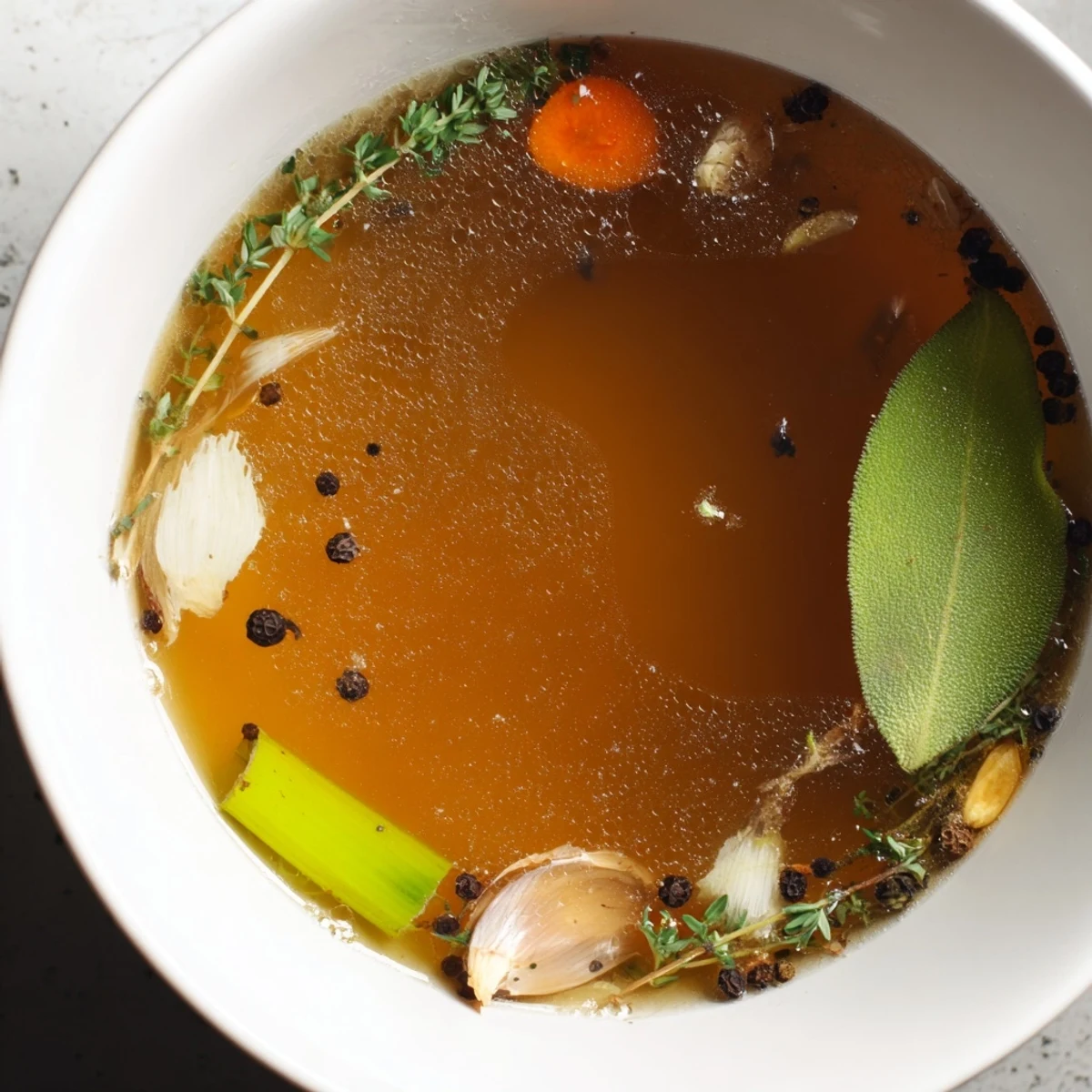
- Pour into airtight containers and refrigerate for up to five days, or freeze for three months or more. I like to freeze some in ice cube trays for small portions.
 Save to Pinterest
 There's a quiet satisfaction in opening the freezer and seeing containers of broth stacked neatly, knowing that every pot of soup or grain dish I make from now on will taste like I put real care into it. This simple act of saving scraps became one of those small cooking shifts that changes how you think about food waste.
What Scraps Work Best
The beauty of this broth is that it's forgiving, but certain scraps are superstars. Onion, carrot, and celery are the traditional trinity and create the base note—think of them as the background singers that make everything else shine. Mushroom stems and dried mushrooms add umami, that savory depth that makes your broth feel rich. Parsley and thyme bring freshness, while garlic and bay add structure. Leek tops and celery leaves contribute sweetness and lightness. Over time, you'll develop an instinct for what feels right to save.
Building a Scrap Habit
Start small by keeping a container in your fridge just for scraps. When you're prepping vegetables for dinner, toss the parts you'd normally discard into that container instead. Once it's nearly full, you're ready to make broth. Some people keep a freezer bag for scraps, adding to it over weeks—this actually works beautifully because frozen scraps break down during cooking and release their flavors even more fully. The key is making it mindless, not an extra chore.
Beyond the Basic Broth
Once you've made a batch or two of plain vegetable broth, you can experiment with additions that shift its personality. A piece of kombu or dried shiitake mushrooms adds serious umami and mineral notes. A few dried chiles bring subtle heat. A cinnamon stick or star anise can create a broth that's wonderful for Asian-inspired dishes. The baseline recipe is reliable, but once you trust the process, you can play with flavors that match what you'll be making next.
- Freeze your broth in ice cube trays first, then pop the cubes into a freezer bag for portion-perfect convenience.
- Label your containers with the date; three months freezer time is plenty, but knowing when you made it helps you stay organized.
- Strain through fine cheesecloth for the clearest broth, or use a regular fine sieve if that's what you have.
 Save to Pinterest
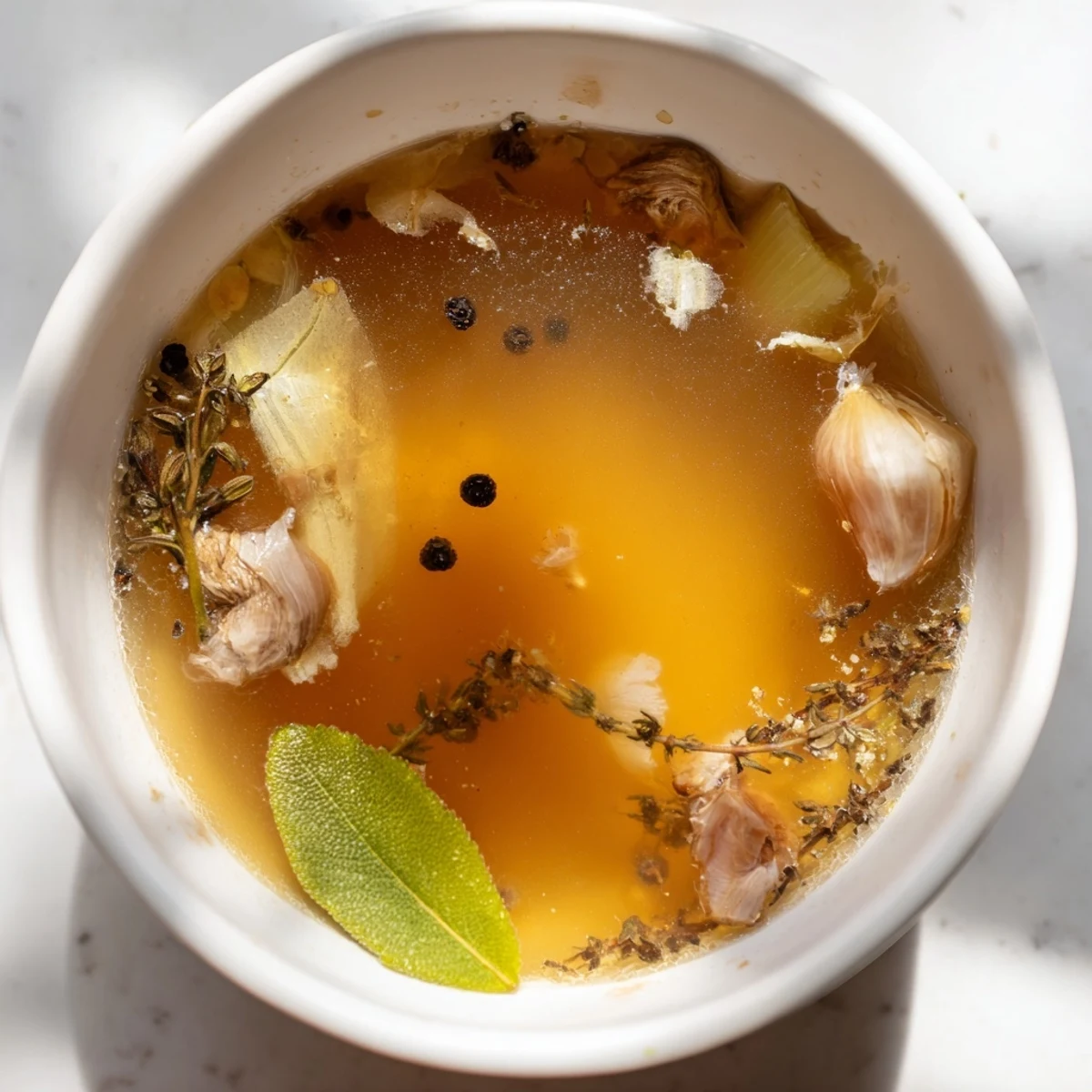
 This broth is proof that the best cooking isn't always about fancy ingredients or complicated techniques—it's about paying attention and using what you have. Once you start making your own, you'll never go back to feeling wasteful in the kitchen.
Recipe FAQs
- → What vegetable scraps work best for this broth?
-
Use mild scraps like onion peels, carrot ends, celery leaves, mushroom stems, and parsley stems for a balanced flavor.
- → How long should the broth simmer?
-
Simmer the broth uncovered for about 1 hour to fully extract flavors without bitterness.
- → Can I freeze the broth for later use?
-
Yes, store the strained broth in airtight containers and freeze for up to 3 months.
- → Are there scraps to avoid when making this broth?
-
Avoid using strong-flavored scraps like broccoli, cauliflower, cabbage, and potato peels as they may cause bitterness or cloudiness.
- → How can I enhance the umami flavor?
-
Add dried mushrooms or a piece of kombu during simmering for extra depth and savoriness.