
 Save to Pinterest
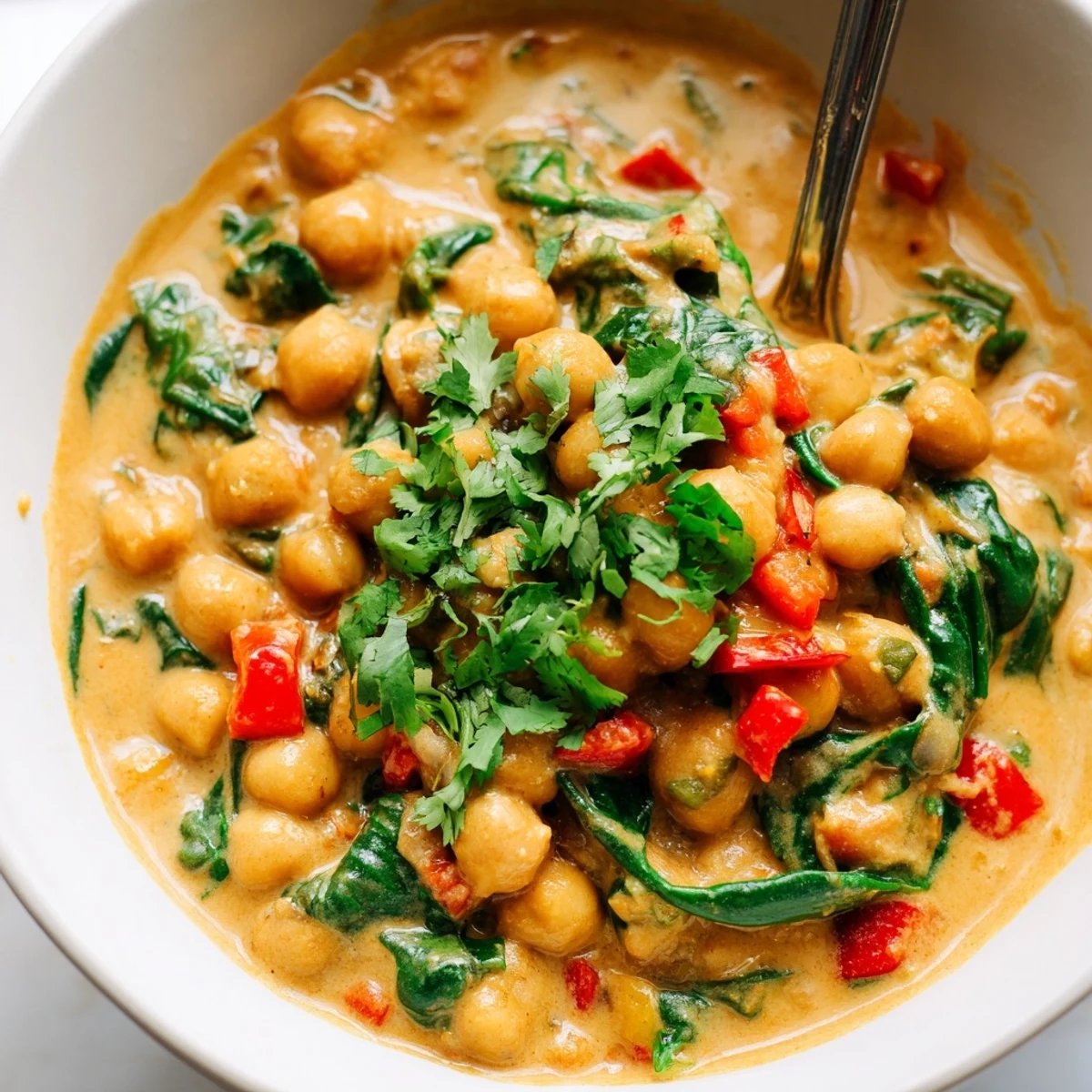
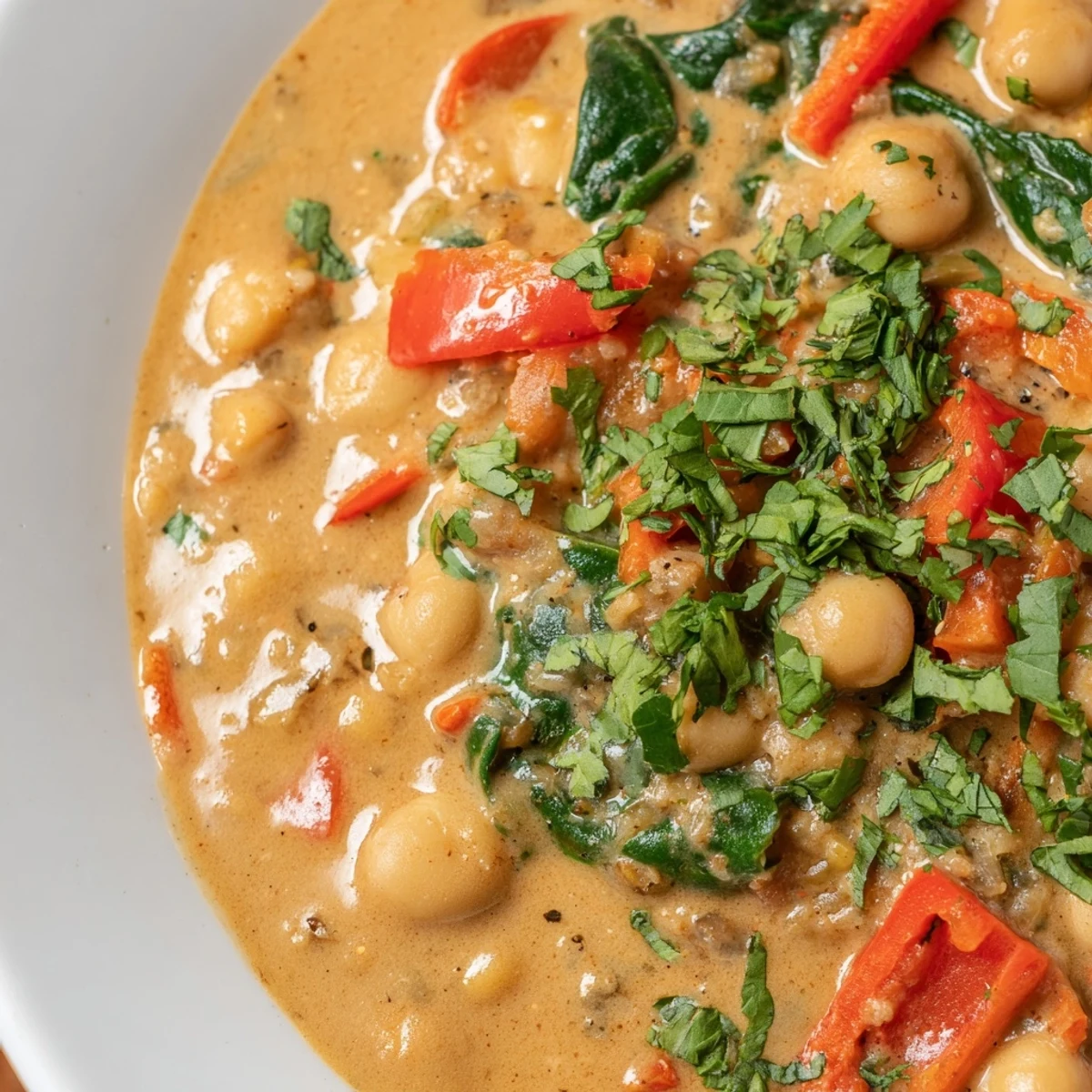
 This vegan dish highlights tender chickpeas gently cooked in creamy coconut milk, complemented by a blend of warming spices like cumin, turmeric, and smoked paprika. Fresh garlic, ginger, and diced bell pepper build a flavorful base, while spinach adds a mild green touch. Lime juice brightens the flavors, and cilantro adds freshness at the end. Perfect for an easy, comforting meal served alongside rice or quinoa.
There's something about the smell of curry powder hitting hot oil that stops me mid-whatever-I-was-doing. I discovered this chickpea curry on a quiet Tuesday evening when I had half a can of coconut milk and needed to feed myself something that felt like a hug in a bowl. The first time I made it, the kitchen filled with this golden, aromatic warmth that made the whole apartment smell like a proper dinner was happening. Now it's become my go-to when I want something that tastes like it took hours but only asks for thirty minutes of your time.
I made this for a friend who'd just gone vegan and was nervous about whether she'd actually enjoy eating this way. Watching her eyes light up when she tasted it, seeing her reach for seconds without thinking—that's when I knew this recipe was special. She asked for it three times that month, and I stopped counting after that.
Ingredients
- Chickpeas (2 cans, drained and rinsed): These are your protein anchor, and rinsing them really does matter—it removes the starchy liquid that can make your curry cloudy.
- Onion (1 large, finely chopped): The foundation of everything good happening here; take your time with this step and let it go translucent and sweet.
- Garlic and ginger (3 cloves minced, 1-inch piece grated): This combination is non-negotiable if you want that warm, slightly sharp undertone that makes curry taste like curry.
- Red bell pepper (1, diced): Adds sweetness and a pop of color that makes the bowl look as good as it tastes.
- Diced tomatoes (1 can, 14 oz): The acid balances the richness of the coconut milk and keeps everything from feeling heavy.
- Fresh spinach (2 cups): Wilts down to almost nothing but adds an earthy finish and sneaky greens.
- Full-fat coconut milk (1 can, 14 oz): Don't even think about the lite version here—you want that creamy richness to carry the spices.
- Vegetable broth (1/2 cup): Just enough to keep the sauce flowing without diluting the flavor.
- Curry powder, ground cumin, ground turmeric, smoked paprika (2 tbsp, 1 tsp, 1/2 tsp, 1/2 tsp): These spices are what turn simple ingredients into something extraordinary; toast them in the oil first to wake them up.
- Cayenne pepper (1/4 tsp, optional): Only if you like heat—I usually leave it out and let people add their own kick.
- Salt and black pepper (1 tsp and 1/2 tsp): Taste as you go; you'll probably need more than you think.
- Coconut oil or vegetable oil (2 tbsp): Coconut oil gives a subtle flavor that complements the spices, but either works.
- Lime juice (1 lime): The squeeze of brightness at the end that makes everything taste sharper and more alive.
- Fresh cilantro (for garnish): A small handful scattered on top changes the whole eating experience.
Instructions
- Start with your oil and aromatics:
- Heat the oil in your pot over medium heat until it shimmers, then add the onion and let it soften for a few minutes—you'll know it's ready when it turns translucent and sweet. Stir in the garlic and ginger next, cooking just long enough to smell that warm, zingy fragrance (about one minute), then add your bell pepper and let everything get cozy together for another two minutes.
- Bloom your spices:
- This is the magic moment—sprinkle in all your curry powder, cumin, turmeric, paprika, and cayenne if you're using it. Stir everything together so the spices coat all those vegetables, and let them cook for just a minute or two; you'll feel the shift when the spices stop smelling sharp and start smelling warm and rounded.
- Build your base:
- Pour in your canned tomatoes (juice and all) and let them bubble away for a few minutes, letting the flavors start to merge. Add your drained chickpeas, coconut milk, and vegetable broth, stirring everything together until there are no dry pockets of spice hiding at the bottom of the pot.
- Let it simmer and develop:
- Cover the pot, turn the heat down to low-medium, and let it bubble gently for fifteen to twenty minutes, stirring every few minutes so nothing sticks. The curry will deepen in color and the flavors will start to taste less separate and more like one unified, delicious thing.
- Finish with greens and brightness:
- Stir in your spinach and let it wilt right into the sauce (it only takes two or three minutes), then squeeze in your lime juice and taste for salt and pepper. Add what you need to make it taste balanced—the lime should be there but not aggressive, like a gentle nudge rather than a push.
- Plate and celebrate:
- Ladle it into bowls, scatter cilantro on top, and serve it hot with whatever base you've chosen (rice, naan, quinoa, whatever makes you happy).
 Save to Pinterest
 My partner came home from a long day, took one spoonful, and just sat down at the kitchen table without saying anything. That silence, that moment of genuine contentment—that's when I realized this recipe had become more than just dinner. It's become the thing I make when I want to say I care without having to say it out loud.
Why This Curry Works Every Single Time
The secret is in the order of operations and respecting what each ingredient is supposed to do. When you build the flavor foundation properly—with the onion, garlic, and ginger getting their time to soften and blend—and then bloom your spices in that fragrant base, you're creating a flavor foundation that's almost impossible to mess up. The coconut milk comes in to cushion and carry all those spices, and the acid from the tomatoes and lime keeps it from ever feeling one-dimensional or heavy.
Making It Your Own
This curry is honestly forgiving enough to take whatever you've got in your crisper drawer. I've thrown in carrots, sweet potatoes, green beans, and even leftover roasted vegetables, and it's never complained. The beauty of curry is that the spice blend is strong enough to carry almost anything you add to it, so you can play around and find your own version without worrying you've broken something.
Serving and Storage
This curry actually tastes better the next day when everything has had time to get to know each other. I often make a double batch on Sunday and eat from it all week—it reheats gently on the stove or in the microwave, and it freezes beautifully for up to three months if you ever manage to have leftovers.
- Serve with steamed basmati rice, warm naan, or fluffy quinoa depending on what sounds right to you.
- For extra heat, add fresh sliced chili or a pinch more cayenne when you're seasoning at the end.
- Kale works just as well as spinach if that's what you've got, and it won't wilt quite as fast, so add it a minute earlier if you want it to soften properly.
 Save to Pinterest
 This is the kind of meal that reminds you why cooking matters—it fills your kitchen with warmth and your bowl with something that genuinely nourishes you. Make it for yourself on a quiet night, or make it for someone you care about and let the food do the talking.